If you look at a map of Melbourne’s public transport network, you’d be right in thinking it’s a substantial service covering most of the city.
But it’s failing in some key areas.
End to end travel time is a vital part of making public transport competitive with driving, and to do this, better more seamless connections between services are needed, to ensure the network can get you from anywhere to anywhere.
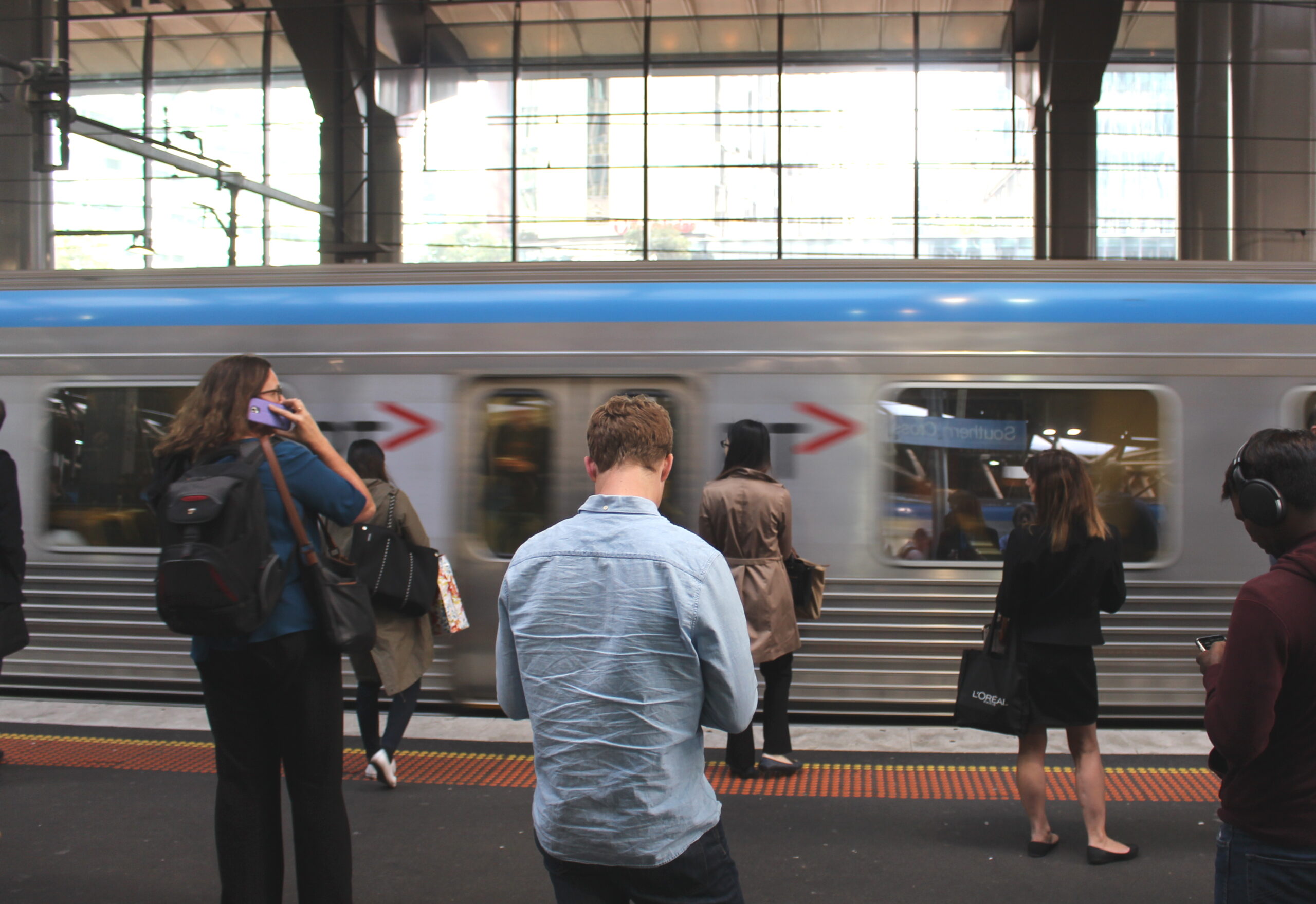
Frequency has to improve. With most suburban buses running only every 30 to 60 minutes, and even waits for trains and trams being as much as 20 to 40 minutes outside peak times, people can spend more time waiting for a service than travelling on it.
Running all trains, trams and main road buses at least “every ten minutes to everywhere” all day, every day, would ensure that all of Melbourne has a “turn up and go” network that people can use without having to check a timetable first, and that connections are easy.
Trams and buses suffer from delays in traffic thanks to a lack of on-road priority. More dedicated tram and bus lanes should be provided to ensure that the most efficient modes don’t get stuck behind mostly single occupant cars.
Smarter traffic light priority would also help cut delays to public transport, even on roads where dedicated lanes can’t be provided, by holding the green for an approaching tram or bus.
Many bus routes run on indirect, slow, confusing routes, taking far too long to get from A to B. Re-organising the bus network to be more like trams – following main roads, direct, easy to understand – will make frequency upgrades more viable and help ensure buses are quicker and simpler to use. Feeder services can be provided to fill gaps between the main road routes, for those people who might find it difficult to walk to a main road.
Mass transit needs to be extended. A growing city means high capacity services: frequent metro extensions to the existing suburban rail network, or potentially light rail if it’s built to European standards of capacity and speed. Prime examples include growing and established outer suburbs such as Baxter, Clyde, Melton, Rowville and Doncaster, and routes catering for cross-suburban travel, extending the reach of fast public transport.
There are many other issues around the public transport network of course, but targeting key upgrades to improve overall travel time will do a lot to help give more people an alternative to driving everywhere – just what our growing city needs.